Skip to product information
1 of 1

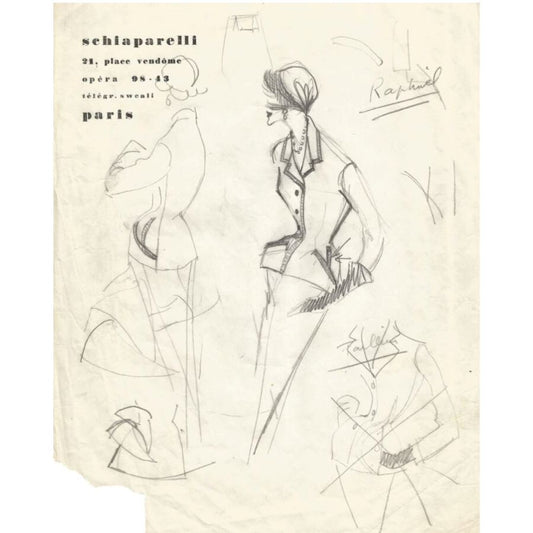
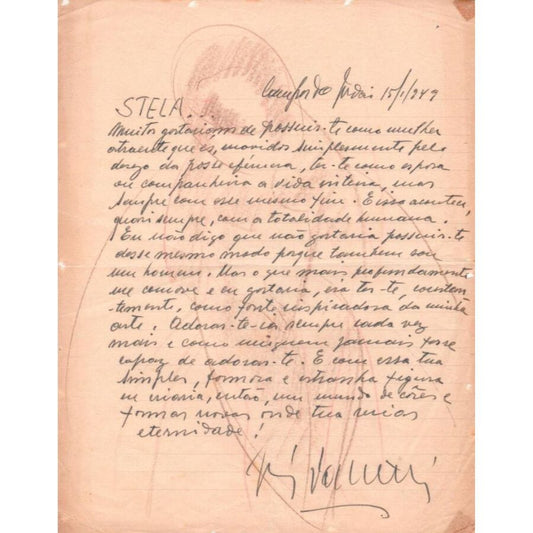
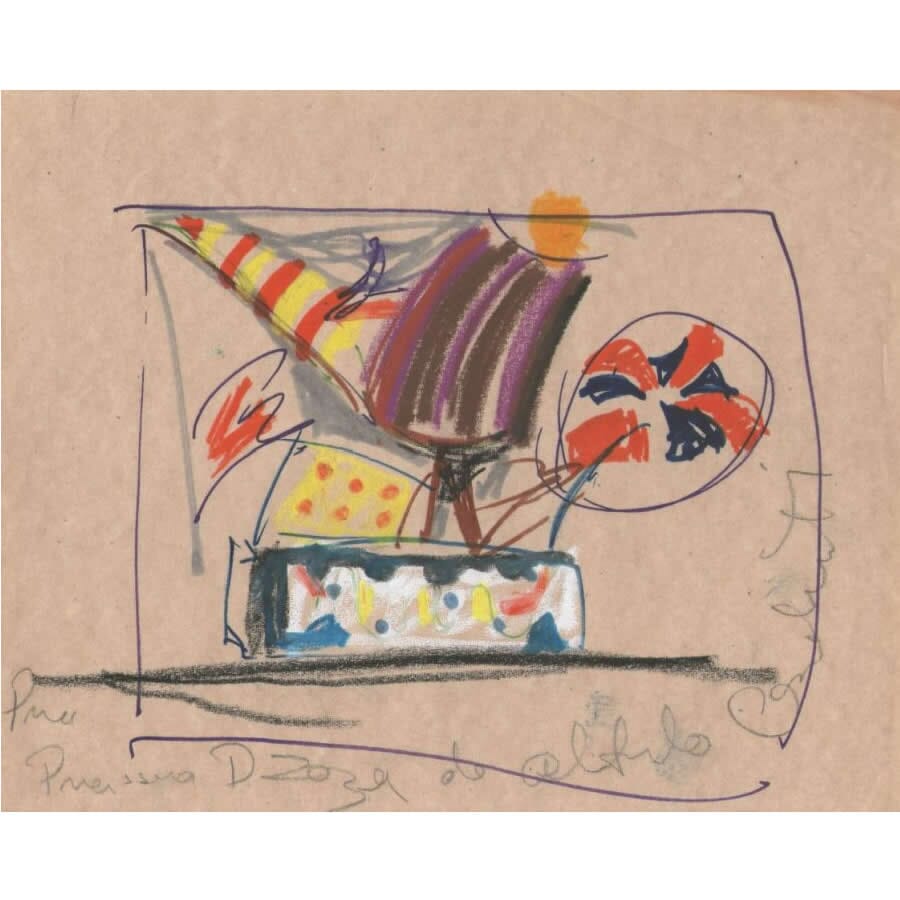
Drawing by Alfredo Ceschiatti

Drawing by Alfredo Ceschiatti

Regular price R$ 0,00 BRL
Regular price Sale price R$ 0,00 BRL
Sale Sold out
Shipping calculated at checkout.

Free shipping

Comes with Certificate of Authenticity and Digital Warranty ©

> This item is no longer in the catalog, see available documents here <

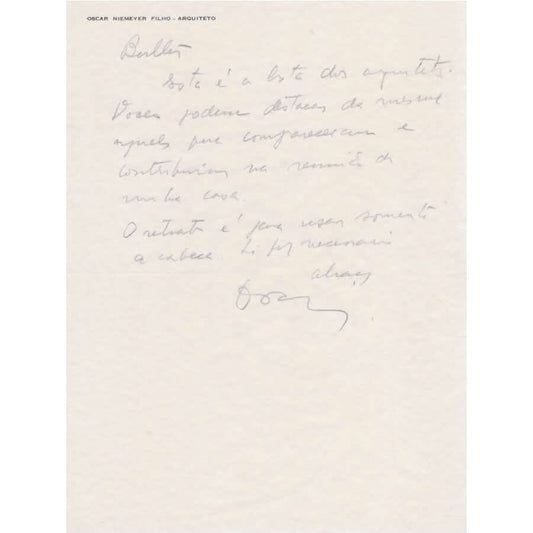
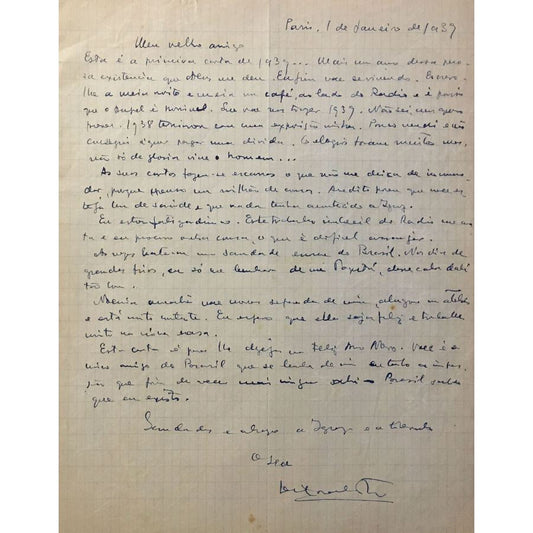
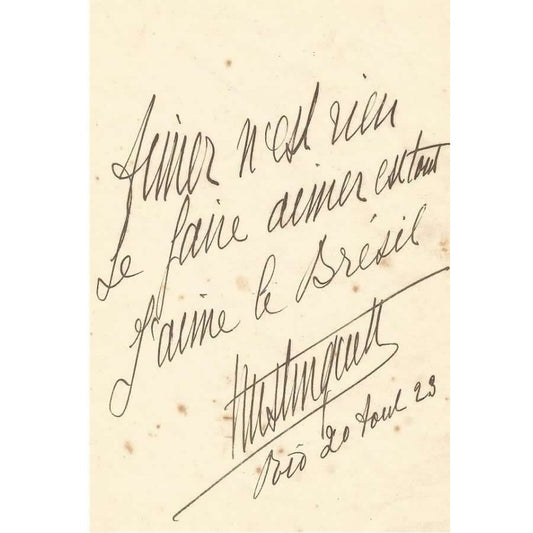
Enthusiastic drawing by the controversial Minas Gerais sculptor Alfredo Ceschiatti, constant partner of Oscar Niemeyer.

  • Drawing with dedication by sculptor Alfredo Ceschiatti.
  • For D. Maria José or Zezé, as she was known.
  • Date and location unknown.
  • 26 cm x 21 cm.
  • Excellent condition of conservation.
  • Unique piece.

Alfredo Ceschiatti (1918 - 1989) was an internationally renowned sculptor from Minas Gerais. He mainly explored the female figure, represented with pure and rounded forms. His first trip to Italy, in 1938, was decisive in the admiration he provoked for the works of the Renaissance masters.

For me, Italy was a shock. (...) Deep down, the person who taught me my whole life was Michelangelo, my great emotion .

This influence also explains the almost always monumental character of his works. Each sculpture took him two to three months, from the first study to the casting, done by specialized assistants.

I think a lot about where it will be placed, that's my starting point, and I prefer large outdoor pieces, where there's more opportunity to explore planes, shadows, and lights. I'd like to make even larger sculptures, like Christ the Redeemer, which I think is a beautiful piece of work. I think sculpture shouldn't be a decorative object. It has to have a more monumental meaning.

In fact, in 1943, Alfredo Ceschiatti began his collaboration with the revolutionary projects of Oscar Niemeyer, from whom the mayor of Belo Horizonte, Juscelino Kubitschek, commissioned the Pampulha Lagoon complex. This was the beginning of the career that would make the architect an internationally renowned professional. Ceschiatti took charge of the award-winning bas-relief of the Pampulha Church, inspired by the power of the Sistine Chapel. He also sculpted "The Embrace", a work of two women embracing, considered immoral by the traditional Minas Gerais family of the time: it was kept for many years until it was finally exhibited in a garden in Pampulha.

In 1960, he finished The Three Armed Forces, the theme of the Monument to the Dead of the Second World War, in Rio de Janeiro, certainly becoming one of his best-known works.

The partnership with Oscar Niemeyer reached its peak with the creation of Brasília, where the sculptor's work accompanied that of the architect: "Banhistas" at the Palácio da Alvorada, "Justiça" at the Supreme Federal Court, "Duas Irmãs" at Itamarati or "Evangelistas e Anjos" at the Cathedral of Brasília were works by Alfredo Ceschiatti.

Niemeyer said of him: “Like two good friends, we walk through life. I, absorbed in architecture, inventing forms, playing with reinforced concrete; he, making his sculptures. Those beautiful, baroque women, full of curves. How I like to see them.”

"D. Maria José or Zezé, as she was known, was an art educator, a pioneering professor at UNB, leaving it in the 1970s in solidarity with her colleagues who were persecuted by the dictatorship. She created the Escola Classe da 104 Sul and was a great friend of the artist, among others such as Oscar Niemeyer and Athos Bulcão." wrote a visitor to the Glórias collection, Claudio Pereira, whom we thank for this information.

The sculptor's documents are preserved mainly by the family and public institutions, this enthusiastic drawing is a rarity.
View full details

Frequently asked questions about the GLÒRIAS COLLECTION

Is there a physical store where I can see the items in person?

No. Glórias operates exclusively online because we serve collectors throughout Brazil and also abroad. If you wish to examine an item before purchase, we will be happy to send high-resolution photographs or additional information. Our team is located in Belo Horizonte (MG).

Do the items sold come with a certificate of authenticity?

Yes. All items available at Glórias have been carefully selected, studied, and certified before being offered for sale. Each purchase comes with a digital certificate of authenticity and guarantee, which we send via email. It is signed and stamped by Mathias Meyer, a French autograph expert since 2010 and a member of the ILAB (International League of Antiquarian Booksellers).

Who selects and certifies the items sold?

All items are selected and certified by Mathias Meyer, a French specialist in autographs, manuscripts, and historical documents since 2010. Throughout his career, he has studied thousands of pieces related to Brazilian history, sports, science, literature, and arts, and is now a member of ILAB (International League of Antiquarian Booksellers) and founder of Glórias.

How do I make a purchase?

You can purchase directly from the Glórias website, 24 hours a day, quickly and securely. If you prefer personalized service or have questions before purchasing, you can also contact us by email at contato@glorias.com.br or by WhatsApp at +55 (31) 98221-5758.

What are the payment methods?

We accept payment via Pix or bank transfer, both with a 3% discount for upfront payment, as well as credit card in up to 3 interest-free installments, offering convenience and security for customers across Brazil.

Can I pay for my purchase in installments?

Yes. You can pay in full via Pix or bank transfer with a 3% discount, or pay in up to 3 interest-free installments by credit card, with immediate shipping after payment confirmation. It is also possible to pay in up to 10 installments via Pix; in this case, shipping will be carried out after the full payment of the purchase.

Can I ask for a discount?

We offer a 3% discount for payments made in full (via Pix or bank transfer) or the option to pay in up to 3 interest-free installments by credit card. Furthermore, the prices of our pieces are carefully determined based on international market supply and demand, the specific characteristics of each item, and sales results of similar pieces. For this reason, we typically do not grant additional discounts. However, if you wish to purchase multiple pieces or make an exceptionally high-value purchase, we would be pleased to consider a special commercial arrangement.

How is delivery made? What will I receive?

Delivery time varies approximately from 1 to 10 business days, depending on the recipient's location. In Brazil, we mainly use SEDEX, and for international shipments, FedEx. The document is placed in an elegant laid paper folder and sent in completely discreet packaging. The digital certificate of authenticity and guarantee is sent by email, in PDF format, for security reasons. Shipping is free throughout Brazil. For international shipments, the shipping cost is a fixed R$ 500.00.

Can I return my purchase?

Yes. For online purchases, the Consumer Protection Code guarantees the right of withdrawal within 7 days of receiving the item. If you are not satisfied, simply contact us and we will respond promptly to find the best solution, which may include a full refund after the return and verification of the item.

What warranties come with the items?

All items sold by Glórias have a permanent guarantee against eventual certification errors, provided that such error is subsequently demonstrated and confirmed by Mathias Meyer. In this event, the buyer will be fully reimbursed. To date, this situation has never occurred. The guarantee does not cover natural alterations or damage caused by improper storage, exposure to light, humidity, insects, or any other external factor that may compromise the preservation of the paper or ink.

Can I resell this piece in the future?

Yes. Should you wish to sell your piece in the future, please contact us. We will be happy to guide you and help you find a new collector, either through a direct sale or through a specialized auction organized by Glórias.

How can I add value to my collection?

If your goal is to go beyond an isolated purchase, the ideal is to build a coherent collection around a theme, a personality, or a historical period, such as aviation pioneers, women who made history, love letters, old photographs of Rio de Janeiro, Oscar Niemeyer, Pelé, or Ayrton Senna. Mathias Meyer can guide you in forming a consistent collection, according to your interests, objectives, and budget.

How should I store my document or autograph?

To preserve your document in the best condition, we recommend against laminating it or keeping it permanently framed, as paper needs to breathe and prolonged exposure to light can accelerate its deterioration. Ideally, store it in a dry, dark, and clean place, protected from humidity, extreme temperatures, dust, and insects, ensuring its preservation for many decades.

Why aren't these pieces in museums?

Throughout history, much of the world's documentary heritage has been preserved thanks to private collectors and dealers. These enthusiasts of historical documents play a fundamental role in the discovery, study, and preservation of pieces that can later be loaned, donated, or sold to museums and other institutions. In Brazil, where many museums have limited financial resources and staff, this collaboration is even more important. Glórias maintains relationships with public institutions, museums, and researchers, both in Brazil and abroad, sharing discoveries, knowledge, and, in some cases, documents for exhibitions.

Can I offer you a part to buy?

With pleasure. The first step is to conduct a preliminary assessment, which will determine the level of authenticity, market value, and the best strategy for your piece. Depending on the outcome, there are several possibilities, such as direct sale, consignment, or a specialized auction.

Where do the parts sold by Glórias come from?

Every document has a unique story. Most of the pieces offered by Glórias were inherited from families who contacted us, while others were acquired at auctions, where they were poorly identified or undervalued, or came from antique dealers, collectors, or companies. Behind every rare document there is a singular trajectory, which makes collecting a fascinating way to preserve and transmit history.